Burnout is not a productivity problem. It is a physiological state — one characterised by measurable dysregulation of the autonomic nervous system, HPA axis dysfunction, and in many cases, structural changes in the prefrontal cortex that affect decision-making, emotional regulation, and sleep architecture. Yet the vast majority of “recovery” programmes still treat it as a scheduling issue: rest more, work less, breathe deeply. For the professionals who arrive at Holina Healing having already tried that approach, this is not news.
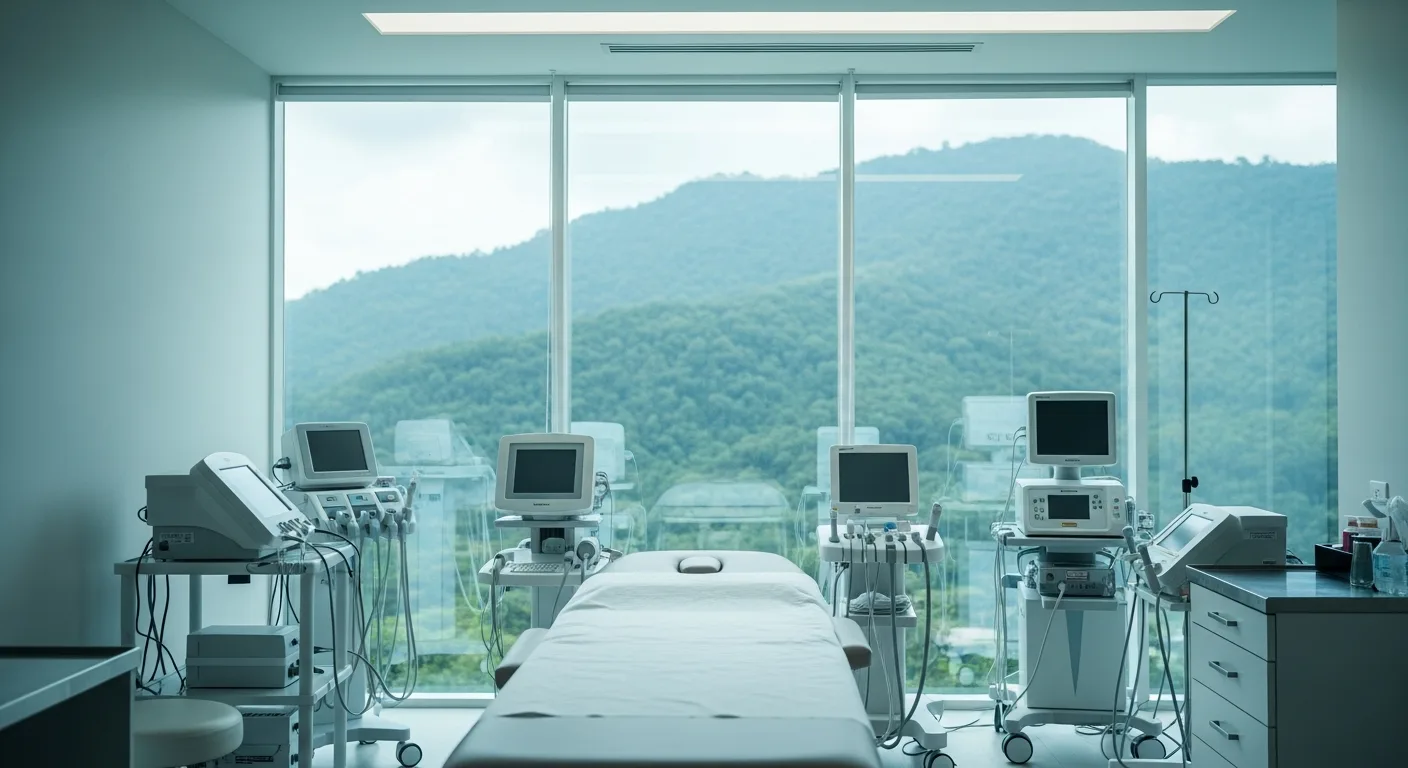
Holina Healing’s burnout protocol was built on a different premise entirely. Located in Khao Yai, Thailand — an environment chosen deliberately for its elevation, air quality, and distance from the stimuli that sustain chronic stress states — our physician-supervised programme begins where most programmes stop: with clinical assessment. Before any intervention is recommended, we establish what is actually happening in your body, because burnout presents differently across individuals, and treatment that ignores that variation tends to fail.
What follows is an honest account of how our burnout retreat in Thailand is structured, what the evidence says about each component, and why the integrated approach matters as much as any individual therapy within it. If you are researching Holina Healing burnout treatment because conventional medicine has offered you antidepressants and a referral to mindfulness classes, this is written specifically for you.
Burnout Is a Physiological Condition — And We Treat It That Way
Most burnout programmes begin with a questionnaire and end with a workbook. You leave with better boundaries, a gratitude practice, and the same dysregulated nervous system you arrived with. At Holina Healing, we start from a different premise entirely: burnout is not a mindset problem. It is a measurable, physiological condition involving disrupted HPA axis function, mitochondrial impairment, autonomic nervous system dysregulation, and — in many cases — chronic low-grade inflammation that has been compounding for years before you ever noticed the warning signs.
This distinction matters enormously in terms of what actually helps. When the hypothalamic-pituitary-adrenal axis has been under prolonged activation, cortisol rhythms become disordered. You may experience the characteristic pattern of exhaustion combined with an inability to rest — wired but depleted, alert but incapable of concentration. This is not a failure of willpower. It is a neuroendocrine system operating outside its normal parameters, and it responds to clinical intervention, not to encouragement.
Our protocol is built on physician-supervised assessment conducted before any programme begins. Every resident undergoes comprehensive laboratory evaluation that goes well beyond standard annual bloodwork. We examine:
- Diurnal cortisol and DHEA-S curves to map adrenal rhythm disruption
- Inflammatory markers including high-sensitivity CRP, IL-6, and TNF-alpha
- Mitochondrial function indicators, including organic acids and CoQ10 status
- Thyroid panel with reverse T3, often overlooked in conventional screening
- Nutritional depletions — particularly magnesium, B12, ferritin, and vitamin D — which directly impair neurological resilience
- Autonomic nervous system function assessed via heart rate variability analysis
This baseline data is not incidental. It becomes the clinical map that drives every subsequent intervention — dietary, pharmacological where appropriate, somatic, and psychological. Nothing is generic. Nothing is assumed. What emerges is a granular picture of how your specific physiology has responded to chronic stress, and precisely where the most meaningful recovery work needs to begin.
That level of precision is what separates a recovery programme from a rest holiday — and it is what our residents consistently report as the first moment they felt genuinely seen by a clinical team.
The Physiological Reality of Burnout: Why Mindset Alone Won’t Fix It
Burnout is not a productivity problem. It is not resolved by a week of better sleep, a digital detox, or a course on time management. For the professionals who arrive at Holina Healing — many of whom have read every book, tried every intervention, and restructured their schedules multiple times — this is both validating and clarifying. The reason those approaches failed is physiological, not personal.
At its clinical core, burnout represents a measurable dysregulation of the hypothalamic-pituitary-adrenal (HPA) axis — the central command system governing your stress response. Chronic, unrelenting demand causes cortisol rhythms to flatten or invert, stripping the body of its natural capacity to mobilise energy in the morning and wind down at night. Simultaneously, the autonomic nervous system shifts into a prolonged state of sympathetic dominance: the physiological equivalent of driving with one foot permanently on the accelerator. Over time, this suppresses immune function, disrupts neuroplasticity, impairs gut motility, and degrades the quality of sleep that would otherwise facilitate recovery.
The result is a self-reinforcing cycle that no amount of willpower can interrupt from the outside. This is why our physician-supervised protocol begins with objective biological assessment rather than assumption.
On admission, every guest undergoes a comprehensive diagnostic workup that typically includes:
- Salivary cortisol mapping across four time points to assess HPA axis rhythm and severity of adrenal dysregulation
- Full thyroid panel including free T3, free T4, reverse T3, and TSH — because subclinical hypothyroidism frequently underlies treatment-resistant fatigue
- Inflammatory markers including hs-CRP and interleukin-6, which are consistently elevated in chronic burnout states
- Mitochondrial function indicators and micronutrient deficiencies, particularly B12, magnesium, ferritin, and vitamin D
- Heart rate variability (HRV) baseline assessment as an objective index of autonomic nervous system resilience
These findings do not merely inform — they direct. Every intervention in the Holina protocol is calibrated to what your biology actually shows, not what burnout is assumed to look like on average. This evidence-based, individualised foundation is what separates clinically grounded recovery from generic rest.
The Physiological Reset: Addressing Burnout at the Cellular Level
Most burnout interventions begin and end with the mind. Therapy sessions, breathing exercises, time off work — these have genuine value, but they leave a critical layer of the problem untreated. At Holina Healing, our physician-supervised protocol starts with a foundational premise: prolonged burnout is not a psychological state that happens to have physical symptoms. It is a systemic physiological condition that requires direct biological intervention.
Chronic stress dysregulates the hypothalamic-pituitary-adrenal (HPA) axis — the central command system governing your cortisol response. In advanced burnout, this axis does not simply produce too much cortisol. It frequently produces too little, reflecting a state of adrenal exhaustion in which the stress response itself has become impaired. Clinically, this presents as flattened cortisol curves, disrupted sleep architecture, immune dysregulation, and profound mitochondrial fatigue. These are measurable, documentable findings — not metaphors for being tired.
Our integrated approach addresses this through several evidence-based clinical pathways, assessed and individualised for each patient during intake:
- Comprehensive neuroendocrine profiling: Salivary cortisol mapping across the diurnal cycle, thyroid panel assessment, and inflammatory marker analysis (including hs-CRP and interleukin-6) provide the biological baseline that shapes every element of the protocol.
- Mitochondrial support therapy: IV micronutrient infusions targeting NAD+, magnesium, B-complex vitamins, and glutathione address the cellular energy deficit that underlies persistent exhaustion — a deficit that diet alone cannot correct at the pace recovery demands.
- Sleep architecture restoration: Beyond sleep hygiene recommendations, we use clinically validated approaches including targeted melatonin precursor support, blue-light protocol management, and where indicated, physician-reviewed intervention for sleep-disordered breathing that frequently accompanies severe burnout.
- Autonomic nervous system recalibration: Heart rate variability (HRV) biofeedback training, cold exposure therapy titrated to individual tolerance, and structured breathwork protocols are used not as wellness add-ons, but as evidence-supported tools for shifting the autonomic balance from chronic sympathetic dominance toward parasympathetic recovery.
The distinction here matters: these are not adjunctive therapies layered over a conventional programme. They are the programme’s foundation. Without biological stabilisation, psychological and behavioural work builds on an unstable substrate — which is why so many people return from conventional retreats feeling temporarily restored, only to relapse within weeks.
The Nervous System Reset: Why Regulation Comes Before Insight
Most burnout interventions begin in the wrong place. They ask an exhausted mind to do cognitive work — to journal, to set boundaries, to reframe negative thoughts — before the underlying nervous system dysregulation has been addressed. At Holina Healing, we reverse that sequence entirely. Before any meaningful psychological work can take root, the autonomic nervous system must be stabilised. This is not philosophy; it is physiology.
Chronic burnout produces measurable, documented changes in the autonomic nervous system. Research published in Psychoneuroendocrinology and related journals consistently shows that burnout patients present with suppressed heart rate variability (HRV), dysregulated cortisol rhythms, and a hyperactive threat-detection response mediated by the amygdala. When the body is locked in chronic sympathetic overdrive — or has collapsed into the dorsal vagal shutdown state that characterises the later stages of burnout — insight-based therapy has a physiological ceiling. The brain cannot consolidate learning, integrate new perspectives, or form adaptive emotional responses when it perceives itself to be under threat.
Our physician-supervised protocol uses a layered, evidence-based approach to nervous system regulation that includes:
- Heart rate variability biofeedback training — clinically validated technology that teaches patients to consciously influence vagal tone, with measurable improvements typically visible within five to seven sessions
- Polyvagal-informed breathwork — structured respiratory protocols, not generic relaxation exercises, calibrated to each patient’s baseline HRV data
- Cold hydrotherapy sequences — physician-supervised contrast therapy protocols that activate the diving reflex and support parasympathetic recovery
- Somatic movement therapy — body-oriented approaches grounded in the work of Bessel van der Kolk and Peter Levine, designed to discharge incomplete stress responses held in the musculature and fascia
These are not supplementary add-ons. They are the clinical foundation on which every subsequent intervention — nutritional, psychological, relational — is built. Patients who arrive having spent years in talk therapy without resolution frequently describe a qualitative shift within the first ten days of this protocol. The body, finally given the conditions it requires, begins to signal safety rather than threat.
Only from that regulated baseline do we introduce deeper psychological and integrative work. Sequencing is not a preference at Holina — it is a clinical requirement.
Nervous System Recalibration: The Physiological Foundation of Sustainable Recovery
Burnout is not a mindset problem. At its physiological core, it represents a measurable dysregulation of the autonomic nervous system — specifically, a collapse of the dynamic balance between sympathetic activation and parasympathetic recovery. Addressing it exclusively through psychological frameworks, however sophisticated, leaves the biological substrate untouched. This is why a significant proportion of people who complete conventional burnout programmes report feeling understood but not genuinely recovered.
At Holina Healing, nervous system recalibration is treated as a primary clinical objective, not a supplementary wellness offering. Every intervention in this phase is selected on the basis of its documented capacity to shift measurable autonomic markers — including heart rate variability (HRV), cortisol awakening response, and inflammatory cytokine profiles — rather than on subjective reports of relaxation alone.
The recalibration protocol draws on several converging modalities, each physician-supervised and sequenced according to the individual’s baseline autonomic assessment:
- Controlled breathwork protocols — specifically slow-paced diaphragmatic breathing at approximately 0.1 Hz, which has been clinically validated to directly increase vagal tone and improve HRV within measurable timeframes
- Cold hydrotherapy applications — applied in graduated, structured exposure sequences to stimulate the diving reflex and train the parasympathetic rebound response
- Somatic experiencing sessions — targeting incomplete stress cycles stored in musculoskeletal and visceral tissue, particularly relevant for individuals whose burnout is layered with unresolved trauma responses
- Neurofeedback training — real-time EEG-based feedback that enables patients to observe and actively influence their own brainwave patterns, supporting a shift away from chronic high-frequency beta dominance
- Photobiomodulation therapy — low-level light therapy with emerging evidence for mitochondrial support and neuroinflammation reduction in individuals presenting with cognitive fatigue and post-exertional symptom patterns consistent with long COVID overlap
Progress is tracked objectively at regular intervals. HRV measurements, sleep architecture data from continuous monitoring, and inflammatory markers from repeat laboratory panels collectively inform whether the protocol requires adjustment. This is integrated medicine operating with the rigour of a clinical framework — responsive to data, not fixed to a predetermined schedule. The goal is a nervous system that has regained its fundamental capacity to flex: to activate when required and, crucially, to recover when the demand passes.
Starting Your Recovery: What the First 72 Hours at Holina Actually Look Like
Most people arrive at Holina having already spent months — sometimes years — navigating a fragmented system of appointments, referrals, and well-meaning advice that never quite cohered into meaningful progress. The first priority, therefore, is not intervention. It is assessment.
Within the first 72 hours, every patient undergoes a structured clinical intake process designed to establish a precise physiological and psychological baseline. This is not a wellness questionnaire. It is a physician-supervised evaluation that includes:
- Comprehensive laboratory panels — cortisol rhythm mapping, thyroid function, inflammatory markers (CRP, IL-6), micronutrient status, complete metabolic panel, and hormonal profiling where clinically indicated
- Autonomic nervous system assessment — heart rate variability measurement to quantify dysregulation severity and identify the dominant stress response pattern (hyperarousal, hypoarousal, or dissociative)
- Neuropsychological screening — validated instruments including the Maslach Burnout Inventory, PHQ-9, GAD-7, and trauma-screening tools to map the cognitive and emotional landscape accurately
- Nutritional and gastrointestinal evaluation — given the well-documented bidirectional relationship between gut health and stress-axis function, this is treated as clinical data, not ancillary information
- One-to-one physician consultation — a substantive clinical conversation, not a 15-minute intake, where your history is placed in full context before any protocol is designed
From this foundation, your attending physician — working alongside specialists in psychiatry, physiotherapy, nutrition, and somatic therapy — constructs an individualised protocol. No two are identical. A 52-year-old executive presenting with adrenal exhaustion and sleep-architecture collapse requires a materially different approach than a 38-year-old long COVID patient with post-exertional malaise and autonomic instability.
What remains consistent across every patient is the underlying principle: recovery from burnout at this depth requires the simultaneous treatment of the body, the nervous system, and the psychological patterns that drove the depletion in the first place. Treating any one of these in isolation is why so many previous attempts have fallen short.
If you are ready to begin with a level of clinical rigour your condition has always deserved, the Holina team is available for a confidential pre-admission consultation — conducted by a physician, not a coordinator.
Burnout is not a productivity problem. It is a measurable biological state — characterised by dysregulated cortisol rhythms, compromised autonomic function, mitochondrial stress, and structural changes in the prefrontal cortex. Addressing it with rest alone, or with conventional outpatient therapy alone, rarely produces lasting physiological recovery. The underlying systems need direct, physician-supervised intervention.
What distinguishes Holina Healing’s protocol is the refusal to treat symptoms in isolation. Every element — the neuroendocrine assessment, the targeted nutritional medicine, the somatic and autonomic regulation therapies, the structured sleep restoration — operates as part of a clinically integrated framework, designed around your specific biological profile and personal history. Nothing is generic. Nothing is incidental.
For professionals who have already exhausted the standard options, this level of clinical rigour matters. You are not looking for a change of scenery. You are looking for a real, evidence-based pathway back to functional capacity.
If you are ready to engage with recovery at that level, we invite you to contact Holina Healing directly to discuss your situation with our medical team.