Khao Yai National Park, Thailand info@holinahealing.com
+66 (0) 82 113 0657 +66 (0) 92 618 5015  (สอบถามภาษาไทย)

Anxiety & Depression
Treatment Thailand.

Anxiety and depression rarely arrive alone.
At Holina, we treat both at once.

Anxiety and depression are often treated as separate diagnoses requiring separate interventions. But in clinical reality, they almost always co-occur, fed by the same dysregulated nervous system, the same unprocessed experiences, and the same physiological patterns of chronic alarm and collapse. Treating one without the other leaves the root untouched.

At Holina Healing Centre, we do not treat labels. We treat the person beneath them — the nervous system that learned to stay on high alert, the body that has been holding the weight of it, and the mind that has been trying to make sense of something that resists explanation. Our residential programme in Khao Yai gives you the time and the environment to address this at depth.

Anxiety and depression treatment retreat Thailand

Why they so often co-occur

The nervous system underpins both. Anxiety is the activated state — fight or flight running when there is no threat. Depression is frequently the collapse that follows sustained activation — the dorsal vagal shutdown that arrives when the system can no longer sustain the alarm. Many people oscillate between both states within the same day. This is not two illnesses. It is one nervous system doing what it learned to do.

What standard treatment typically misses

Medication and weekly therapy can bring meaningful relief, and we do not dismiss them. But they rarely reach the body, where so much of the pattern is held. Anxiety and depression are not only thoughts to be restructured. They are physiological states, laid down in the tissues, the breath, the posture, and the gut. A residential programme that addresses the nervous system directly — through the body as much as through language — reaches the places that conventional approaches often leave untouched.

How It Presents

Anxiety and depression look different
for every person who carries them.

Many people arrive at Holina uncertain whether what they are experiencing has a name. These are some of the most common ways anxiety and depression show up in people who come to us.

Persistent low mood

A flat, grey quality to life that rest does not shift. The things that once brought pleasure feel muffled or unavailable. Getting through the day feels like wading.

Chronic anxiety and worry

A background hum of unease that has no clear object, or that attaches itself to everything. The body stays braced even when the mind knows there is nothing to fear.

Sleep disruption

Difficulty falling asleep, waking in the early hours, or sleeping too much without feeling rested. The nervous system does not know how to power down.

Physical exhaustion

A tiredness that sleep does not touch. The body carries the weight of sustained arousal or prolonged shutdown, and the result is an exhaustion that feels deeper than physical.

Emotional numbness

Feeling cut off from your own emotions, from people you love, or from your own life. Going through the motions while feeling absent from the inside.

Social withdrawal

Pulling back from connection not from a preference for solitude but from a system that has stopped feeling safe in the presence of others.

How Holina treats anxiety and depression.
Body first. Then the mind. Then the life.

Nervous system regulation as the starting point

Before anything else, we help the body find some safety. A nervous system locked in anxiety or depression cannot process, integrate, or genuinely change until its baseline state shifts. Polyvagal-informed work, somatic therapy, and breathwork begin to give the body experiences of regulation — not forced relaxation, but the gradual, repeated felt sense that it is safe to settle.

Individual psychotherapy

You will work one to one with an experienced therapist in private, confidential sessions. Drawing on trauma-informed, cognitive, and integrative approaches, this work helps you understand the patterns driving your anxiety and depression, connect them to their origins, and begin to shift them at the level where they actually live.

Somatic and body-based work

Anxiety and depression are held in the body — in the breath, the posture, the gut, and the muscles. Somatic therapy works directly with these patterns, helping the body release what it has been holding and learn how to inhabit a different physiological state. Many people find that this work reaches places that years of talking never did.

Movement therapy and breathwork

Movement therapy helps the nervous system complete the stress cycles that anxiety keeps interrupted. Rebirthing breathwork and other breath-based practices access the autonomic system directly, producing shifts in state that are felt rather than reasoned. Both support the body in learning what regulation actually feels like.

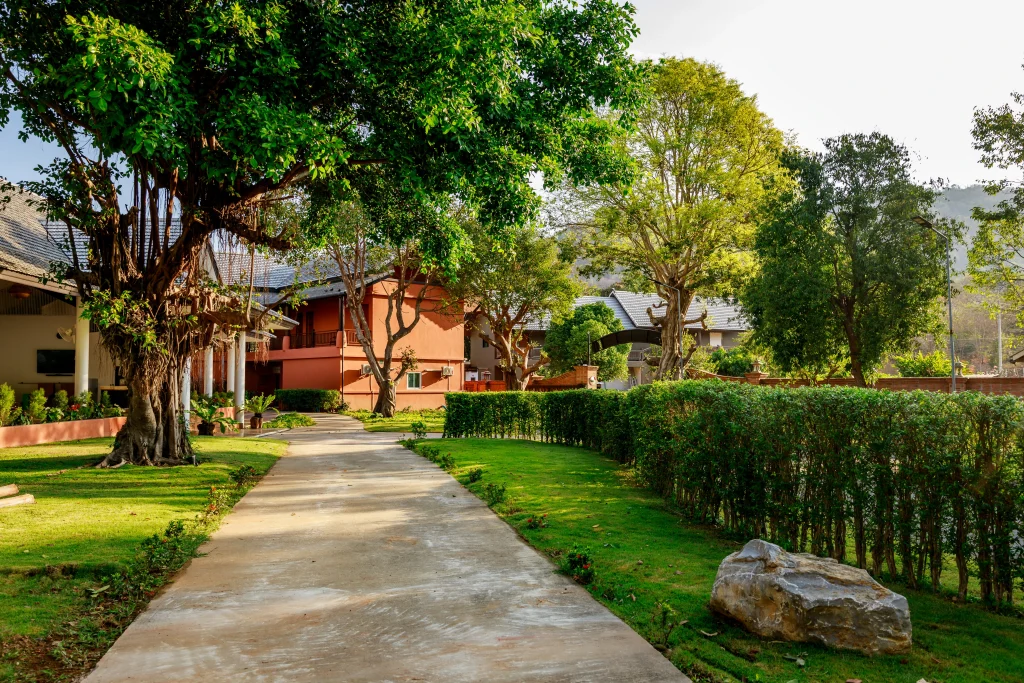
Holina anxiety and depression clinical approach Khao Yai
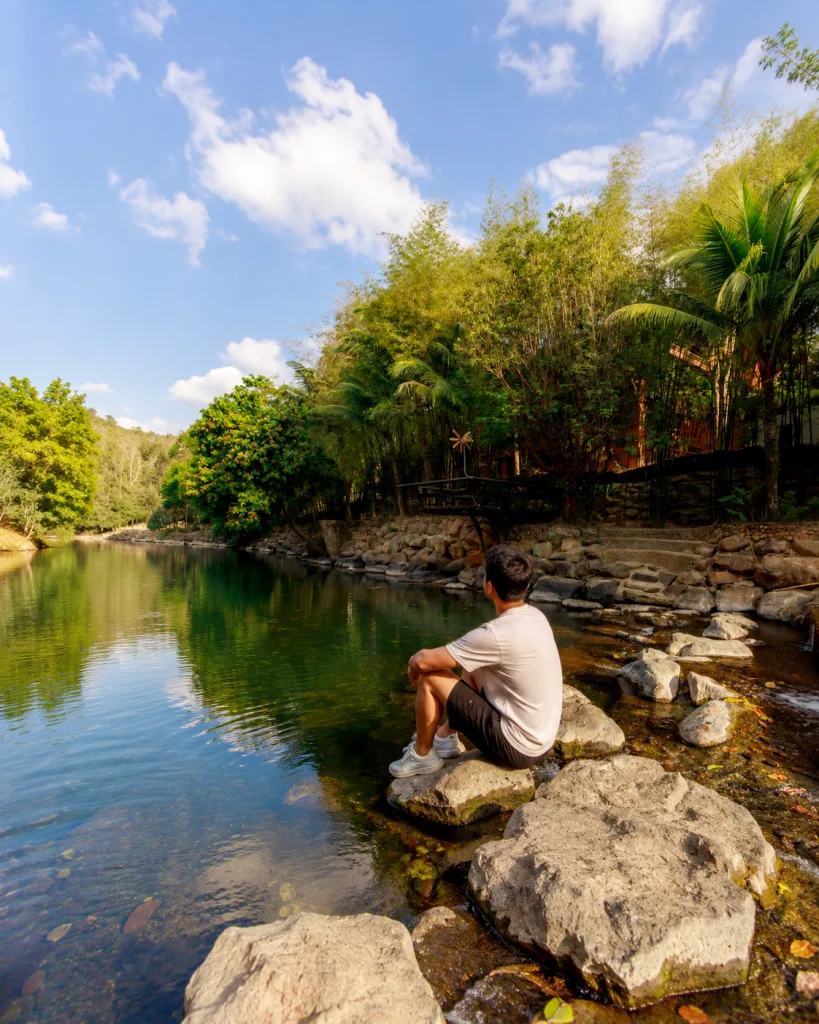
Residential anxiety depression treatment Holina Healing riverside

Why residential treatment reaches
what weekly therapy cannot.

Removing the daily triggers

For most people with anxiety and depression, the environment they return to between therapy sessions is the same one that keeps the pattern running. Work, relationships, responsibilities, digital noise — all of it continues to activate the same nervous system responses that the therapy is trying to address. Removing yourself from that environment, even temporarily, changes everything.

Continuous support instead of one hour a week

Weekly therapy is valuable but inherently fragmented. You open something, and then life closes back over it before the next session. In residential care, the work is continuous. The therapeutic relationship deepens daily, the modalities reinforce one another, and your nervous system has an unbroken stretch in a safe, regulated environment to begin genuinely reorganising.

The compounding effect of immersion

Time matters. The body does not reorganise in a weekend, and genuine nervous system change requires sustained, repeated experience of safety over days and weeks. Residential immersion in Khao Yai — surrounded by forest, far from the demands of ordinary life — creates conditions for that change that simply cannot be replicated one hour at a time.

People who come to Holina
for anxiety and depression tend to:

  • Have tried medication or weekly therapy and found it helpful but incomplete
  • Recognise that what they carry goes deeper than the surface symptoms suggest
  • Feel tired in a way that is not simply physical — a flatness or depletion that has been present for a long time
  • Notice that anxiety or low mood is affecting their relationships, their work, or their sense of who they are
  • Want to understand the roots of what they are experiencing, not simply manage it
  • Feel that the body is part of what is holding them back — not just the mind
  • Are ready to give themselves the time and space to actually heal, rather than coping for another year
Anxiety depression recovery retreat Holina Healing Thailand
Related at Holina: Nervous System Reset Burnout Recovery Polyvagal Therapy Somatic Therapy All Programmes
Common Questions

Anxiety and depression treatment
at Holina, answered.

Is Holina a psychiatric facility?

No. Holina is a psychological and wellness facility. We work with the emotional, behavioural, and nervous system dimensions of anxiety and depression — not with psychiatric conditions requiring medication management. If you are currently on psychiatric medication, we will discuss this during intake and work transparently with your existing clinical team.

Do I need a formal diagnosis to come?

No. Many of the people who benefit most from our work have never received a formal diagnosis. If you recognise the experience of anxiety or depression in your own life and are ready to address it with sustained support, that is enough. We work with what you bring rather than with labels.

What if I am currently on antidepressants?

We work with people who are taking antidepressants and will never advise you to stop or change your medication without your prescribing doctor’s involvement. Our programme supports and complements your existing treatment rather than replacing it. Medication decisions remain yours and your doctor’s.

How long should I plan to stay?

For meaningful, lasting work with anxiety and depression, we typically recommend a minimum of four to six weeks. Shorter stays can provide genuine relief and new tools, but the deeper nervous system change that produces lasting results takes time. We will discuss this honestly during your intake call.

Is the programme one-to-one or group-based?

Both. Individual psychotherapy is the core of your programme. Group therapy is also available and many people find it valuable, but it is never a requirement. Your clinical team will recommend the balance that suits you.

This is not about managing it better.
It is about reaching what is underneath.

All enquiries are completely confidential. No obligation. We respond personally.

Begin Your Recovery →
+66 (0) 82 113 0657  ·  +66 (0) 92 618 5015
info@holinahealing.com  ·  Khao Yai National Park, Thailand
Have a Question?
Confidential Enquiry

Get Help Now

This field is for validation purposes and should be left unchanged.