Every therapy at Holina serves one purpose: the whole person.
No single modality heals a person. What heals a person is a carefully composed therapeutic environment — where the right approaches are sequenced together, each reinforcing the others, in a setting that supports the work at every level. At Holina Healing Centre in Khao Yai, we draw on a wide range of evidence-informed therapeutic and clinical modalities, assembled into a programme that is tailored to each individual rather than applied as a fixed protocol.
The therapies described on this page are available individually or in combination within the Holina programme. Your clinical team will recommend the right blend based on your specific situation, history, and goals. Nothing is mandated — the programme is built around you.
BODY-BASED THERAPIES
Body-based and somatic therapies. Where healing meets physiology.
Trauma and stress live in the body. Body-based therapies work with the nervous system, the tissues, and the physical patterns that psychological approaches alone cannot fully reach.
The foundation of body-based work at Holina. Addresses how trauma and stress are held in the physical body and supports the nervous system in releasing what it has been carrying.
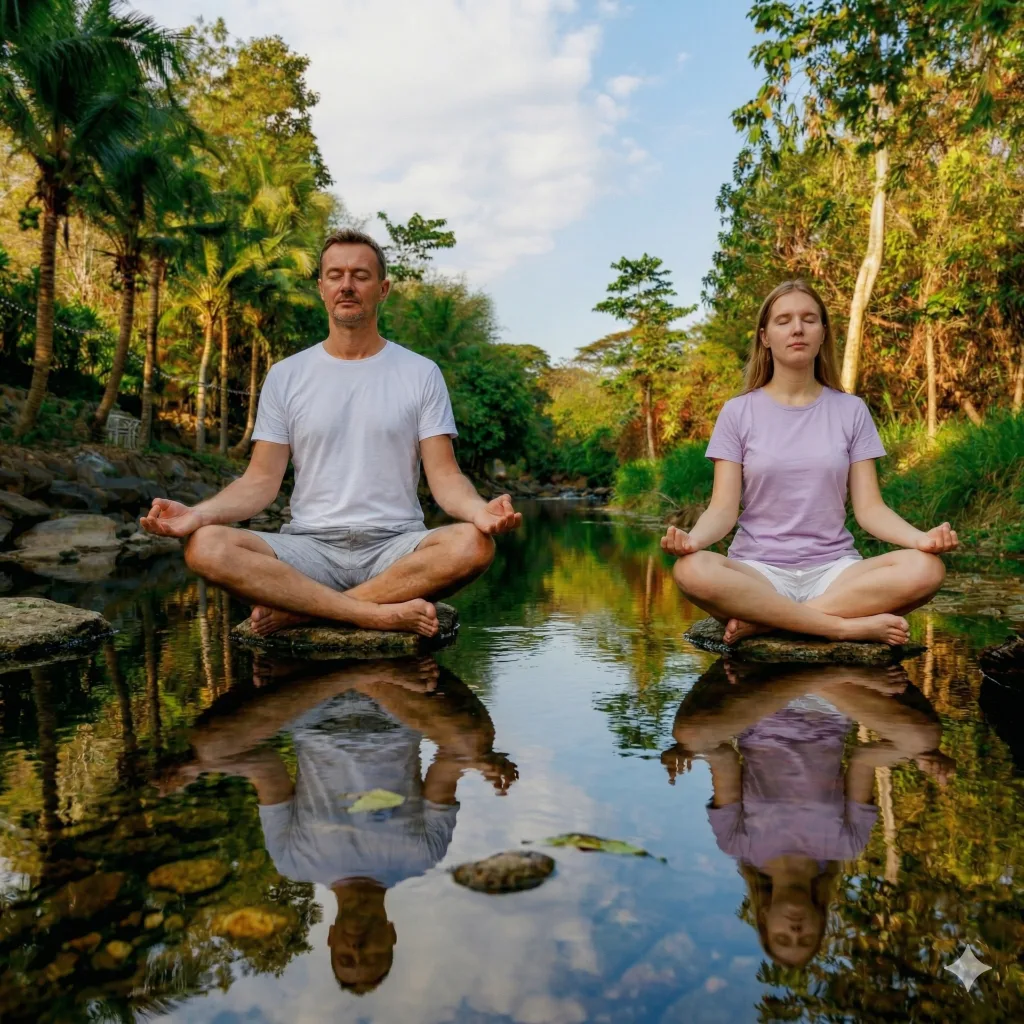
Daily yoga practice woven through the programme rhythm, adapted to each client's current state and therapeutic needs.
PSYCHOLOGICAL THERAPIES
Psychological and mind-based therapies. Where understanding meets change.
Psychological therapies provide the relational and cognitive context for healing — the space to make sense of experience, understand patterns, and build the psychological capacities that lasting recovery requires.
Internal Family Systems — parts work that approaches the inner world with curiosity rather than control, reaching the places that ordinary talk therapy cannot.
Conscious, connected breathing that accesses the autonomic system directly, producing regulation and release that other approaches cannot reach.
INTEGRATIVE & MEDICAL
Integrative and medical therapies. Where clinical science supports recovery.
Physical restoration and cellular health are not separate from psychological and somatic healing — they are its foundation. Holina's integrative and medical therapies address the physiological dimension of recovery and longevity directly.
A comprehensive cellular optimisation programme combining HBOT, IV therapy, stem cells, and PRP for deep physical restoration.
YOUR PROGRAMME
No two programmes at Holina are identical.
The modalities above are the building blocks of a Holina programme, not a fixed curriculum. Your clinical team assembles them into a personalised therapeutic plan based on your specific situation, history, and goals — sequenced so that each modality reinforces the others rather than working in isolation.
A programme for someone working with complex trauma will look different from one for an executive recovering from burnout, which will look different from one focused on physical longevity and restoration. The right combination, at the right pace, in the right sequence, is what produces the outcomes that any single modality cannot achieve alone.
Clinical intake at the start of every programme maps your specific needs and designs a plan accordingly
The plan adapts as you progress — what you need in week one is not what you need in week four
Modalities communicate with each other through a shared clinical team who track your progress across all dimensions
The programme closes with two structured aftercare workbooks and Case Manager support — you build your own recovery plan, rather than being handed one
The right combination of therapies changes what becomes possible.
All enquiries are completely confidential. No obligation. We respond personally.