You have restructured your schedule, taken the weekend off, tried the morning routine, and committed — genuinely committed — to doing less. And yet the exhaustion remains. The flatness persists. The thing that used to make you sharp now leaves you staring at a screen, waiting for motivation that does not arrive. If this sounds familiar, you are not failing at recovery. You are misunderstanding what recovery actually requires.
Burnout is not a discipline problem. Decades of neuroscientific research have established it as a measurable physiological state — one involving dysregulated stress-response systems, structural changes in the prefrontal cortex, and a compromised hypothalamic-pituitary-adrenal (HPA) axis. Willpower, which is itself a prefrontal cortex function, cannot rescue a brain whose prefrontal resources have been systematically depleted. Telling someone with clinical burnout to try harder is, neurologically speaking, the equivalent of asking a fractured limb to heal through better posture.
Understanding the neuroscience of burnout recovery changes the entire treatment framework. It explains why willpower fails in burnout not as a character flaw but as a predictable biological outcome. It also explains why physician-supervised, evidence-based interventions — those that address nervous system regulation, neuroinflammation, and hormonal recalibration — produce outcomes that rest and resolve alone cannot. What follows is a clinically grounded look at what is actually happening inside a burned-out brain, and what the evidence says about reversing it.
Burnout Is a Neurological State, Not a Motivational Failure
When high-functioning professionals hit the wall of burnout, the instinct is almost always the same: push harder, sleep more efficiently, optimise the schedule, find a better productivity system. The assumption embedded in each of these responses is that burnout is a problem of insufficient willpower or poor self-management. Neuroscience tells a different story — and understanding that story is the first step toward a recovery that actually holds.
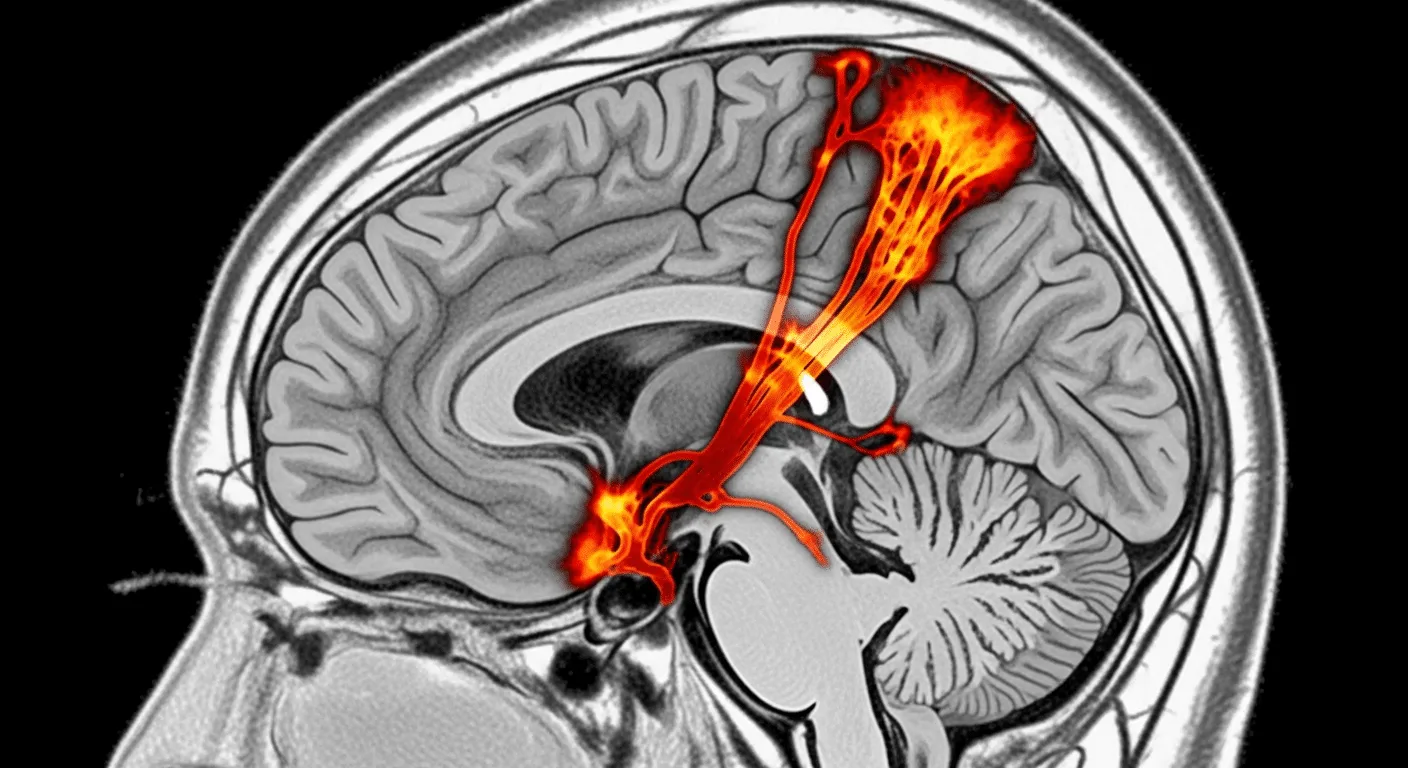
Burnout produces measurable, structural changes in the brain. Chronic stress sustained over months or years leads to documented alterations in three interconnected regions: the prefrontal cortex, the amygdala, and the hippocampus. These are not metaphorical descriptions of feeling overwhelmed. They are observable on functional MRI imaging and correlate directly with the cognitive, emotional, and physical symptoms that burned-out individuals experience every day.
The prefrontal cortex — responsible for executive function, rational decision-making, and emotional regulation — shows reduced grey matter density and diminished metabolic activity under prolonged stress load. This is precisely why burned-out executives struggle to prioritise tasks they once handled effortlessly, or find themselves reacting to minor frustrations with disproportionate intensity. The biological machinery that supports calm, strategic thinking has been systematically degraded.
Simultaneously, the amygdala — the brain’s threat-detection centre — becomes hyperreactive. Research published in Psychoneuroendocrinology has demonstrated that chronic occupational stress produces amygdala enlargement and increased connectivity to stress-response pathways, keeping the nervous system locked in a state of low-grade threat activation. This is not anxiety in the colloquial sense. It is a hardwired physiological alarm system that no longer knows how to disengage.
The consequences extend further into the body through three well-documented mechanisms:
- HPA axis dysregulation: Prolonged cortisol elevation followed by cortisol depletion disrupts sleep architecture, immune function, and metabolic regulation.
- Autonomic nervous system imbalance: Sustained sympathetic dominance suppresses parasympathetic recovery, impairing digestion, cardiovascular variability, and cellular repair.
- Neuroinflammation: Elevated pro-inflammatory cytokines — including IL-6 and TNF-alpha — cross the blood-brain barrier, directly contributing to cognitive fog, anhedonia, and fatigue that feels categorical rather than ordinary tiredness.
Willpower is a prefrontal cortex function. Asking someone in clinical burnout to use willpower to recover from burnout is neurologically equivalent to asking a person with a fractured femur to walk it off. The very neural substrate required to exert self-discipline and sustain effort is the tissue most compromised by the condition itself. This is not weakness. This is biology — and it demands a clinical response, not a motivational one.
What’s Actually Happening in Your Brain During Burnout
Burnout is not a motivational deficit. It is a measurable neurobiological state — one that can be identified through functional assessments, hormonal panels, and increasingly, neuroimaging. Understanding what has changed at a physiological level is the first step toward addressing it with the precision it requires.
At the center of burnout pathology is the hypothalamic-pituitary-adrenal (HPA) axis — the central command system governing your stress response. Under sustained high demand, this system undergoes a process of dysregulation that researchers have documented extensively. Initially, cortisol output is elevated. Over time, with chronic exposure to unrelenting stressors, the HPA axis can become blunted — producing a paradoxical state in which cortisol levels drop below normal ranges. This is not resilience. It is depletion. The system has exhausted its capacity to mount a response, and the downstream consequences affect virtually every organ system in the body.
Concurrent with HPA dysregulation, several critical brain structures are directly compromised:
- The prefrontal cortex — responsible for executive function, decision-making, and emotional regulation — shows reduced grey matter volume and diminished activity in individuals with chronic stress exposure. This is why complex decisions feel impossible and why emotional reactivity increases: the neural architecture that normally governs these functions is structurally and functionally impaired.
- The hippocampus — central to memory consolidation and contextual learning — is particularly vulnerable to elevated glucocorticoids. Sustained cortisol exposure suppresses neurogenesis in this region, contributing to the cognitive fog, memory disruption, and sense of mental “blankness” that many burned-out individuals report.
- The amygdala — the brain’s threat-detection center — becomes hyperactivated and structurally enlarged, increasing the sensitivity of the fear and alarm response. Minor stressors register as emergencies. The nervous system loses its capacity for proportionality.
There is also significant evidence implicating the autonomic nervous system. Burnout is associated with a measurable reduction in heart rate variability (HRV), a clinically validated marker of vagal tone and parasympathetic function. Low HRV correlates with impaired stress recovery, increased inflammatory load, and reduced cognitive flexibility — none of which respond to willpower, positive thinking, or a long weekend.
This is why physician-supervised assessment matters. Without understanding which systems are dysregulated and to what degree, any intervention — however well-intentioned — is operating without a map.
What Actual Recovery Looks Like: Protocols, Not Promises
Recovering from burnout is not a matter of rest, reframing, or rediscovering motivation. At the neurobiological level, it requires targeted intervention across several systems simultaneously — the HPA axis, the autonomic nervous system, mitochondrial function, and the prefrontal-limbic circuit. Willpower cannot reach any of these. Clinical protocols can.
Physician-supervised burnout recovery programs use a structured, evidence-based framework that begins with comprehensive baseline assessment — not a questionnaire, but actual data. This typically includes cortisol curve testing across the diurnal cycle, inflammatory markers such as hs-CRP and IL-6, thyroid panel including reverse T3, micronutrient status, and where indicated, genetic polymorphisms affecting neurotransmitter metabolism. These results determine intervention, not generic wellness protocols.
From that foundation, an integrated approach addresses recovery through several concurrent tracks:
- Autonomic recalibration — Heart rate variability biofeedback, neurofeedback targeting frontal alpha asymmetry, and breathwork protocols with demonstrated effects on vagal tone. These are not relaxation techniques; they are clinically validated tools for resetting the nervous system’s threat-detection threshold.
- Neuroendocrine support — Addressing HPA axis dysregulation through physician-supervised supplementation, sleep architecture intervention, and where appropriate, low-dose adaptogenic or pharmacological support based on individual lab data.
- Somatic and trauma-informed therapy — For patients whose burnout is layered over unresolved trauma, and somatic experiencing work at the level of implicit memory and nervous system encoding — reaching what cognitive approaches cannot.
- Metabolic and mitochondrial restoration — IV micronutrient therapy, targeted nutrition, and structured movement protocols calibrated to current cortisol load rather than conventional fitness standards.
Critically, these interventions require time, continuity, and medical oversight. Immersive residential programs offer a specific advantage here: removing the patient from the environment that sustains the stress response, while delivering daily therapeutic contact across modalities. Research on neuroplasticity consistently shows that change requires repeated, varied activation of new neural pathways — which cannot happen in a single weekend or a weekly therapy appointment.
Burnout is not a character flaw that discipline can correct. It is a measurable physiological state that responds to measurable physiological intervention. That distinction matters — because it determines whether you spend another year pushing harder, or begin working with your nervous system instead of against it.
Burnout is not a character flaw, a productivity problem, or evidence of insufficient commitment. It is a measurable neurobiological state — one involving dysregulated HPA axis activity, compromised prefrontal cortical function, and autonomic nervous system imbalance that willpower, by definition, cannot address. Telling an exhausted nervous system to try harder is like demanding a fractured bone bear more weight. The biology simply does not respond to effort alone.
Recovery requires the same precision as any other clinical condition: accurate assessment, physician-supervised intervention, and an integrated approach that addresses the physiological, psychological, and metabolic dimensions simultaneously. Clinically validated therapies — from nervous system regulation and trauma-informed modalities to nutritional medicine and targeted somatic work — create the conditions in which genuine neurological restoration becomes possible. These are not complementary additions to recovery. For many patients, they are the recovery.
At Holina Healing in Khao Yai, Thailand, our multidisciplinary clinical team works with professionals and high-achievers who have already exhausted conventional approaches. If you are ready to address burnout at the level where it actually exists — in the nervous system, not the calendar — we invite you to reach out and begin a clinically grounded assessment.