When something overwhelming happens, the body prepares to act. The stress hormones surge, the muscles brace, the breath shortens — the whole system mobilises for survival. But when the threat is inescapable, or when the person is too young or too powerless to respond, that mobilisation has nowhere to go. The survival energy does not discharge. It stays locked in the body, encoded in posture, in breath patterns, in the way a person holds their jaw or carries their shoulders. Years later, it is still there — running silently beneath the surface, shaping mood, relationships, and physical health.
Movement therapy for trauma works with this reality directly. Not through exercise, and not through talking about what happened. Through guided, intentional, and sometimes simply expressive movement that gives the body the chance to do what it was never allowed to do — complete the response it began, discharge the energy it never released, and finally update the signal from survival to safety.
The biologist Peter Levine observed that animals in the wild, after narrowly escaping a predator, would shake and tremble — visibly discharging the survival energy before returning to grazing as if nothing had happened. Humans rarely do this. We override the completion instinct with social propriety, cognitive control, or simple numbness. Movement therapy for trauma creates the conditions — the safety, the support, the permission — for that natural discharge to occur.
Language lives in the cortex. Trauma lives in the older, subcortical parts of the brain — the parts that respond to threat before language even registers. Talk therapy is invaluable for making sense of experience, but it cannot directly reach the survival responses held below language. Movement accesses those older systems directly, which is why it so often reaches material that years of talking has circled without touching.
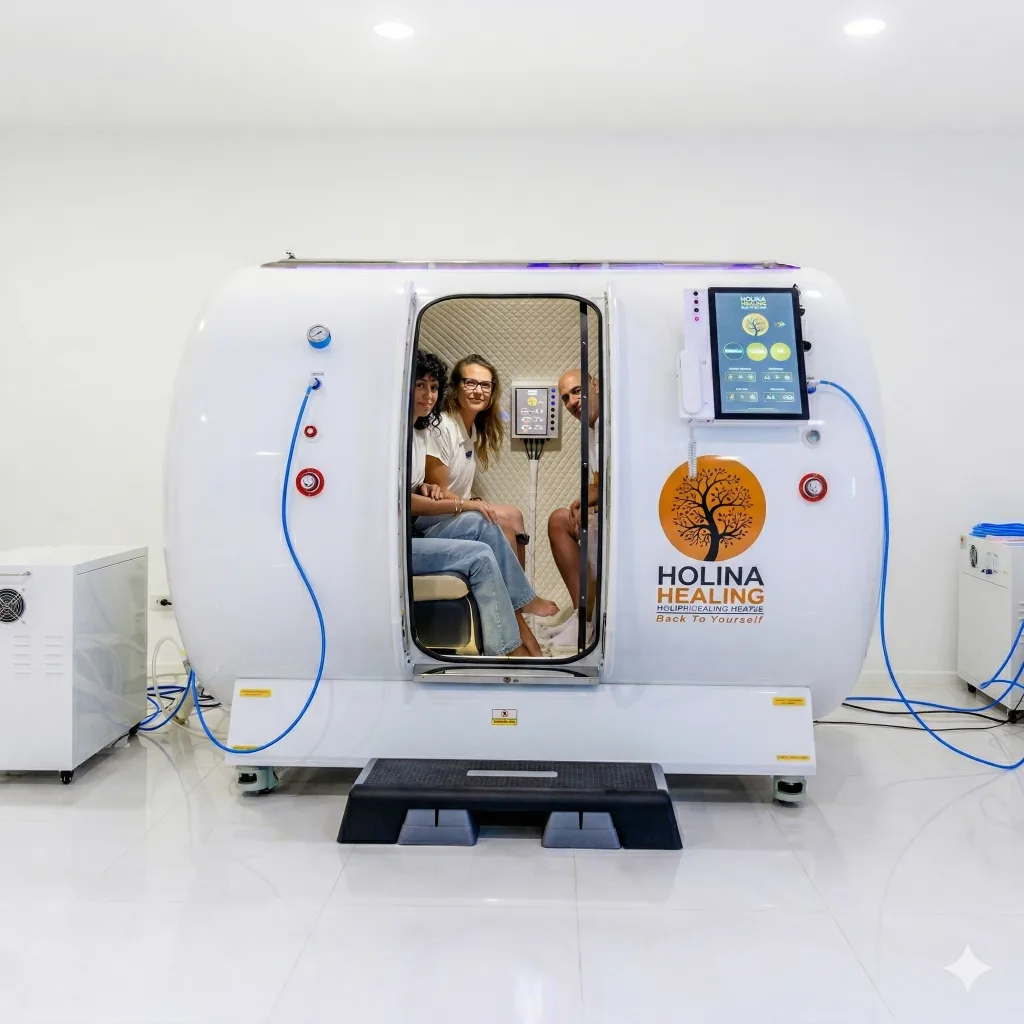
Movement therapy at Holina is offered in both individual and group formats. Individual sessions provide a private, held space for deeper or more vulnerable work, guided one to one by a practitioner who tracks your nervous system responses and keeps the work within a window you can tolerate. Group movement sessions offer something different — the particular healing that comes from moving alongside others who are also in the process of returning to their bodies.
This is not a fitness class, and the goal is not physical improvement. The goal is the completion of something that was interrupted. Sessions are guided with that intention — following impulses, slowing down, shaking, breathing, sometimes being entirely still. Whatever your body needs to do to complete the cycle is given permission to happen, within the safety of a therapeutic container.
Many people arrive at movement therapy with significant ambivalence about their bodies. If you have been carrying trauma, your body may not feel like a safe or trustworthy place. This is understood and expected. Sessions begin wherever you are — sometimes just with breath and small, slow movements — and build gradually as your system finds what safety feels like. You will never be pushed beyond what you can tolerate.
Each session begins with an arrival practice. This might be as simple as standing still and noticing what is present — where tension is held, what the breath is doing, what impulse or resistance the body is carrying. No judgement, no correction. Just noticing. This opening slows the pace enough for the nervous system to register that it is safe to be present.
From the arrival, the session opens into movement guided by what the body wants to do rather than what the mind thinks it should. A practitioner is present throughout — witnessing, occasionally guiding, but never directing in a way that overrides the body's own intelligence. Movements can be subtle or expansive, quiet or vigorous, according to what wants to emerge.
Every session closes with a period of settling. After movement that may have surfaced significant material, the nervous system needs time to integrate and regulate. This closing phase is unhurried and is treated as equally important as the movement itself. What happens in the settling is often where the most lasting shifts are felt.
Movement therapy works best when it is part of a therapeutic ecosystem. At Holina it integrates naturally with:
A meta-analysis of 15 studies found body- and movement-oriented interventions produced a medium effect size in reducing PTSD symptoms in traumatized adults.
Read the study →A VA-authored review of 6 studies found Tai Chi and Qigong were well tolerated by trauma-exposed populations, with reported benefits including relaxation and improved physical and cognitive functioning.
Read the study →Not at all. Movement therapy for trauma is not about fitness or physical ability. Sessions are adapted entirely to where you are — physically, emotionally, and in your relationship with your body. Many people who come to this work have been significantly disconnected from their bodies for years. That is not a barrier. It is often exactly where the work begins.
Numbness and disconnection are common starting points for people with trauma histories. Sessions are designed to meet you there rather than require you to produce emotions on demand. Over time, and with the support of a skilled practitioner, the body typically begins to thaw — but in its own time and at its own pace. Nothing is forced.
Yes, with appropriate adaptation. Your practitioner will be briefed on any physical considerations during your clinical intake, and sessions will be designed accordingly. Movement therapy can be conducted entirely through small, subtle movements if needed — the scale of movement is not what makes it effective.
The frequency of movement therapy sessions is determined by your clinical profile and programme length. Your treatment team will discuss the right balance during your intake assessment. Movement therapy is typically combined with somatic therapy, individual psychotherapy, and other modalities rather than used in isolation.
No. The work is always within your control and consent. You are never asked to perform, produce specific movements, or behave in ways that feel invasive or embarrassing. The session is guided by your body's own impulses, with your practitioner as a supporting presence rather than a directing authority.
All enquiries are completely confidential. No obligation. We respond personally.
Begin Your Programme →