The last appointment was, in many ways, the strangest one. The bloods were clear. The scan was clean. The consultant said the words the patient had been waiting eighteen months to hear, and the room was suddenly quieter than it had ever been during treatment. There was a leaflet about follow-up surveillance, a date for the next imaging in six months, and a warm, brief goodbye from a team that had been the central organising relationship of the entire previous year. The patient walked out of the hospital, into a car park that had become, over months of treatment, almost familiar, and drove home to a house that everyone had been working very hard to keep functional in their absence.
This is supposed to be the part where the gratitude takes over. And often, in the first weeks, it does. But for a meaningful proportion of cancer survivors — the literature suggests one in five at the conservative end, considerably higher in some cancer types and treatment intensities — what arrives next is not the steady return to ordinary life that everyone has been waiting for. It is something stranger, harder, and more isolating. It is, in clinical terms, post-treatment trauma. And the survivor pathway, in most health systems, is not set up to recognise or address it.
This piece is for survivors, and for those who love them, who have noticed that the after has not been what anyone expected.
Why Survivorship Produces Trauma the System Did Not Plan For
Cancer treatment, at the depth most contemporary protocols operate, is an extended physiological emergency. Surgery, chemotherapy, radiotherapy, immunotherapy — these interventions, even when they succeed, ask the body and the nervous system to tolerate sustained periods of being chemically, surgically, or radiologically pushed in directions that no other adult experience comes close to matching. The medical team, throughout, provides containment. The treatment protocol provides structure. The diagnosis itself, paradoxically, provides a kind of clarity — there is a thing happening, and a thing being done about it.
What end of treatment produces is the sudden withdrawal of all of that. The structure stops. The medical containment loosens. The diagnosis fades from active organising frame into surveillance frame. And the patient, who has been holding everything together through the months of treatment, often discovers that the holding-together was being supported by the very intensity it was responding to. With the intensity gone, the substrate becomes visible — and what is in the substrate is, in many cases, trauma.
The cancer-survivorship literature has, over the past decade, named this with increasing clarity. The condition has been called post-treatment trauma, cancer-related PTSD, and several other terms. The presentations vary, but the underlying pattern is consistent — a nervous system that has been operating in emergency mode for too long and that is not, in the immediate aftermath, capable of straightforward return to baseline.
What the Inside of Post-Cancer Trauma Actually Looks Like
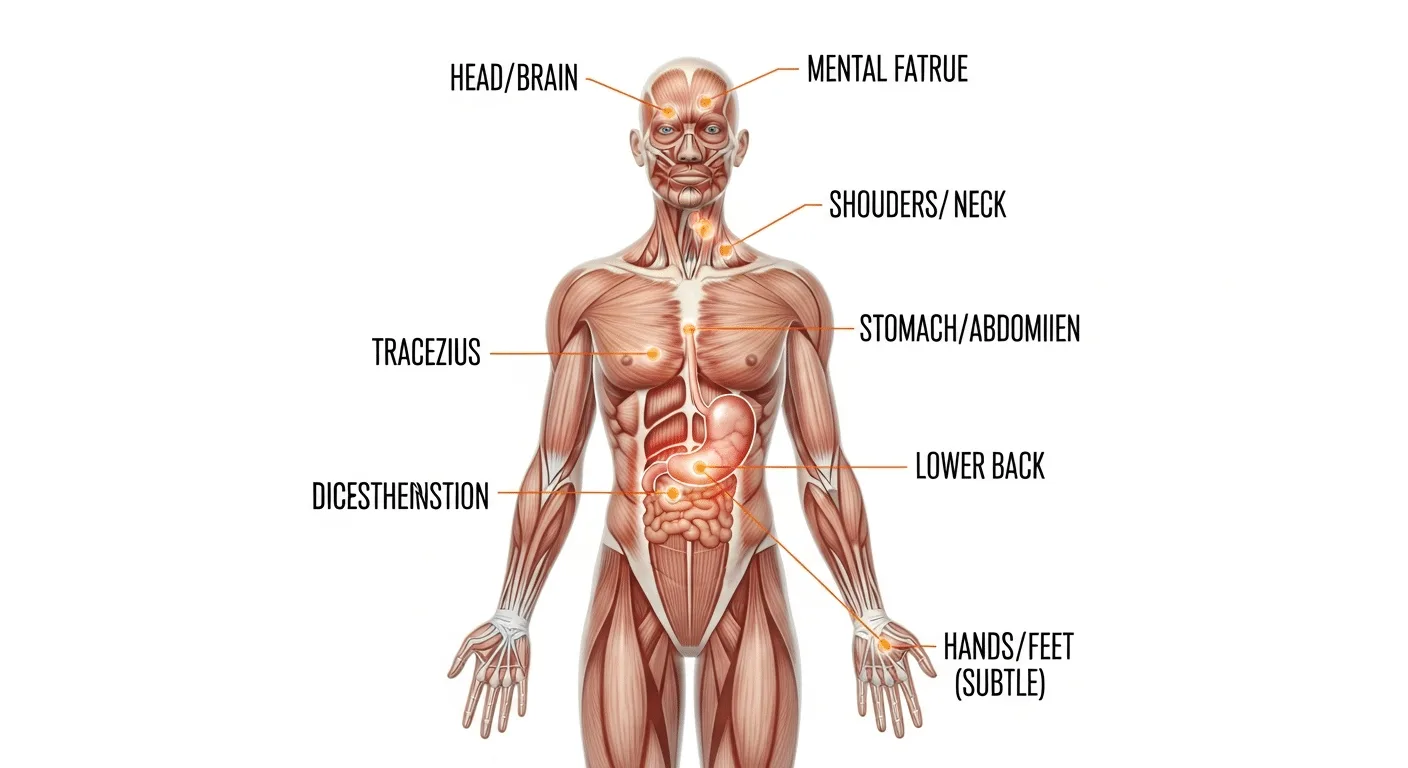
The texture is recognisable to those who carry it, and it is often invisible to those around them. Sleep that has not properly returned since treatment ended, often with dreams that revisit the hospital, the chemo chair, the radiotherapy bunker, the moments of receiving difficult news. A sustained low-grade dread that the recurrence will arrive, with the felt sense of it sometimes overwhelming the rational analysis of statistical likelihood. Hypervigilance around the body — every twinge, every fatigue, every headache filtered through a question that did not exist before the diagnosis.
For survivors of cancers involving the breast, reproductive system, head and neck, or visible surgical sites, the relationship with the body itself often shifts in lasting ways. The body that was treated is the same body that lives the after, and the after often involves a quiet estrangement from a physical self that no longer feels reliable or familiar. This can show up in intimacy difficulties, in body image disturbance, in clothing that no longer fits the felt sense of self, in a reluctance to make plans involving the body that the previous version of the person would have made without thinking.
For survivors with children, particularly young children, there is often an additional layer — guilt about the months of treatment in which they could not be the parent they wanted to be, anticipatory grief about a future they have been told they may now have but cannot quite trust, and a relational pattern with the children that is sometimes more anxious or more distant than it was before the diagnosis.
For those whose treatment involved ICU admissions, severe complications, or extended fragility, the trauma signature overlaps with medical trauma more broadly. The survivor is carrying both the cancer-specific layer and the critical-care layer, and both layers benefit from focused attention.
Why the Survivorship Pathway Has Not Been Enough
The survivorship support that follows treatment in most health systems is competent at what it offers and limited in what it offers. Follow-up imaging and bloods. A specialist nurse contact. Sometimes group support, sometimes a brief course of counselling, sometimes referral to a charity that supports survivors of the specific cancer type. These services do useful work, and for some survivors, they are sufficient.
What they are not designed to do is trauma-specific work at the depth that a meaningful subset of survivors requires. The counselling is typically supportive rather than trauma-focused. The medical follow-up is appropriately concerned with recurrence rather than with the psychological substrate. The voluntary sector support is often peer-based and emotionally valuable but does not, in most cases, address the autonomic and somatic dimensions of post-treatment trauma.
The result is that many survivors find themselves, twelve to eighteen months after treatment ends, in a quieter version of the storm they had hoped would have passed by now. They function. The bloodwork is fine. The next scan goes well. And underneath, the nervous system has not returned to itself.
What Recovery Specifically Asks For in This Category
The work that produces sustained shift in post-cancer trauma shares a structure with trauma work in other contexts but has particular features in this population. It is paced gently — many survivors are still in a phase of physiological recovery, and the work cannot ask more of the body than the body can currently offer. It is somatic at the front, attending to the autonomic patterns and the body-image work that conversation alone cannot reach. It includes the specific medical-trauma memories where they are present, addressed through or related processing approaches. It allows space for the grief, including grief for the version of life before the diagnosis, which is its own legitimate piece of work and rarely receives sufficient room elsewhere.
The setting that supports this work most efficiently is residential, in our experience, for a window of three to four weeks. The home environment, with its understandable focus on continuing the recovered life, is rarely the environment in which the unfinished pieces can be allowed to surface. A held container, away from the routines that have organised the resumption of normality, provides what the surveillance pathway alone cannot.
We coordinate where appropriate with treating oncology teams and survivorship clinicians, particularly for patients still in surveillance phases. The intention is supportive of medical follow-up rather than alternative to it.
A Note for Survivors Reading This Quietly
The fact that the cancer is gone is true, important, and worth letting in. The fact that the trauma may not yet be gone is also true, and equally important, and addressing it does not minimise the gratitude for being alive that often runs alongside it. The two things sit together. The work that allows them to sit together more easily, rather than in painful tension, is available.
The first conversation is not a commitment to anything. It is only the willingness to have what you have been quietly carrying received by someone who recognises it.