Marcus sits at the kitchen table at 6 a.m., lukewarm coffee cooling in a chipped mug. His daughter will wake in twenty minutes. His son is already awake, calling from upstairs. Marcus has not slept more than four hours in succession for eighteen months. His body feels leaden, his mind fractured. He moves through the morning routine with mechanical precision, but the words he speaks to his children sound hollow, as though broadcast from another room. He loves them. He is certain of this. Yet he feels nothing. By noon, his patience has eroded to nothing. By evening, he weeps in the shower, though he cannot articulate why.
What Marcus experiences is not laziness, poor parenting, or a failure of character. It is parental burnout, a measurable clinical condition characterised by emotional exhaustion, depersonalisation of the parent-child relationship, and profound diminishment of personal accomplishment. This differs meaningfully from depression or anxiety, though it frequently co-occurs with both. The condition emerges from chronic interpersonal stress, relentless responsibility, and the particular vulnerability of parents who internalise their child’s struggles as a reflection of their own adequacy.
This piece is for exhausted parents whose medical practitioners have found nothing physiologically wrong, whose therapists offer coping strategies that feel inadequate, and who recognise themselves in descriptions of burnout but have found no pathway toward genuine recovery.
What This Is, Specifically
Parental burnout was formally characterised by Roskam and Mikolajczak in the Frontiers in Psychology and has since gained recognition across major clinical frameworks. The Lancet and BMJ have published findings establishing parental burnout as distinct from general burnout, depression, or parental stress. The condition manifests as three core dimensions: emotional exhaustion (depletion of emotional resources to meet parental demands), depersonalisation (a detached, sometimes resentful stance toward parenting roles and relationships), and reduced personal accomplishment (the erosion of confidence and efficacy in parenting).
The National Institute for Health and Care Excellence acknowledges parental burnout as a significant health concern, though few treatment protocols exist beyond psychoeducation. Unlike occupational burnout, parental burnout cannot be resolved through sabbatical or role modification, as parenthood itself cannot be suspended. The exhaustion accumulates insidiously. Parents often report that standard interventions—sleep hygiene advice, mindfulness applications, cognitive restructuring around perfectionism—provide temporary respite but fail to address the architectural problem: the relentless, uncompensated labour of parenting in contemporary culture, combined with biochemical dysregulation from chronic stress.
Risk factors include perfectionist personality traits, single parenting, parenting a child with additional needs, previous trauma or attachment difficulties, and cultural or personal expectations of parental self-sacrifice. The condition occurs across socioeconomic strata, though it is underdiagnosed in populations who view parental suffering as normative or morally necessary.
Why Standard Treatment Often Misses This
Conventional healthcare approaches to parental distress typically operate within one of two narrow frameworks. The first pathologises the parent: depression screening, anxiety questionnaires, and pharmaceutical intervention. The second individualises the problem: parenting classes, behavioural parent training, and responsibility-centred cognitive therapy that implicitly locates the deficit within the parent’s capacity or thinking patterns.
Both approaches miss the systemic reality. Parental burnout emerges from a genuine mismatch between neurobiological capacity and environmental demand. A parent with burnout does not need to think differently about their children’s misbehaviour. They need their nervous system to recover from years of dysregulation. They do not need tips for time management; they need genuine reprieve and the renewal of neural pathways associated with reward, meaning, and relational attunement.
Standard outpatient therapy, delivered in fifty-minute weekly sessions whilst the parent remains embedded in the stressor environment, cannot interrupt the chronic activation state. Sleep remains fragmented by parental vigilance. Stress hormones remain elevated. The parent learns techniques they have insufficient metabolic energy to implement. The therapeutic relationship becomes another performance, another expectation to meet. What emerges instead is a deepening sense of failure: the treatment has failed, therefore the parent must be failing too.
Nervous System Recovery and Relational Restoration
Emerging neuroscience clarifies the mechanism. Chronic parental stress dysregulates the hypothalamic-pituitary-adrenal axis and depletes the prefrontal systems responsible for emotional regulation and empathy. A parent in burnout literally cannot access the neural substrates necessary for warm, attuned parenting. This is not a moral failing. It is a biological consequence of prolonged threat activation. The depersonalisation many burnt-out parents describe, an experience of observing themselves parent from outside their own body, reflects actual dissociative neural patterning.
Recovery requires more than insight or technique. It requires sustained interruption of the stress response coupled with active restoration of the autonomic nervous system. This is why residential treatment, though unconventional for parental burnout, offers particular advantages. Time away from the parenting role permits the acute stress response to downregulate. Sleep begins to restore. The body ceases to maintain constant vigilance. Simultaneously, therapeutic work can proceed at depth, addressing not only current stressors but frequently the intergenerational attachment patterns that predispose to parental perfectionism and self-abandonment.
What a Residential Period Provides
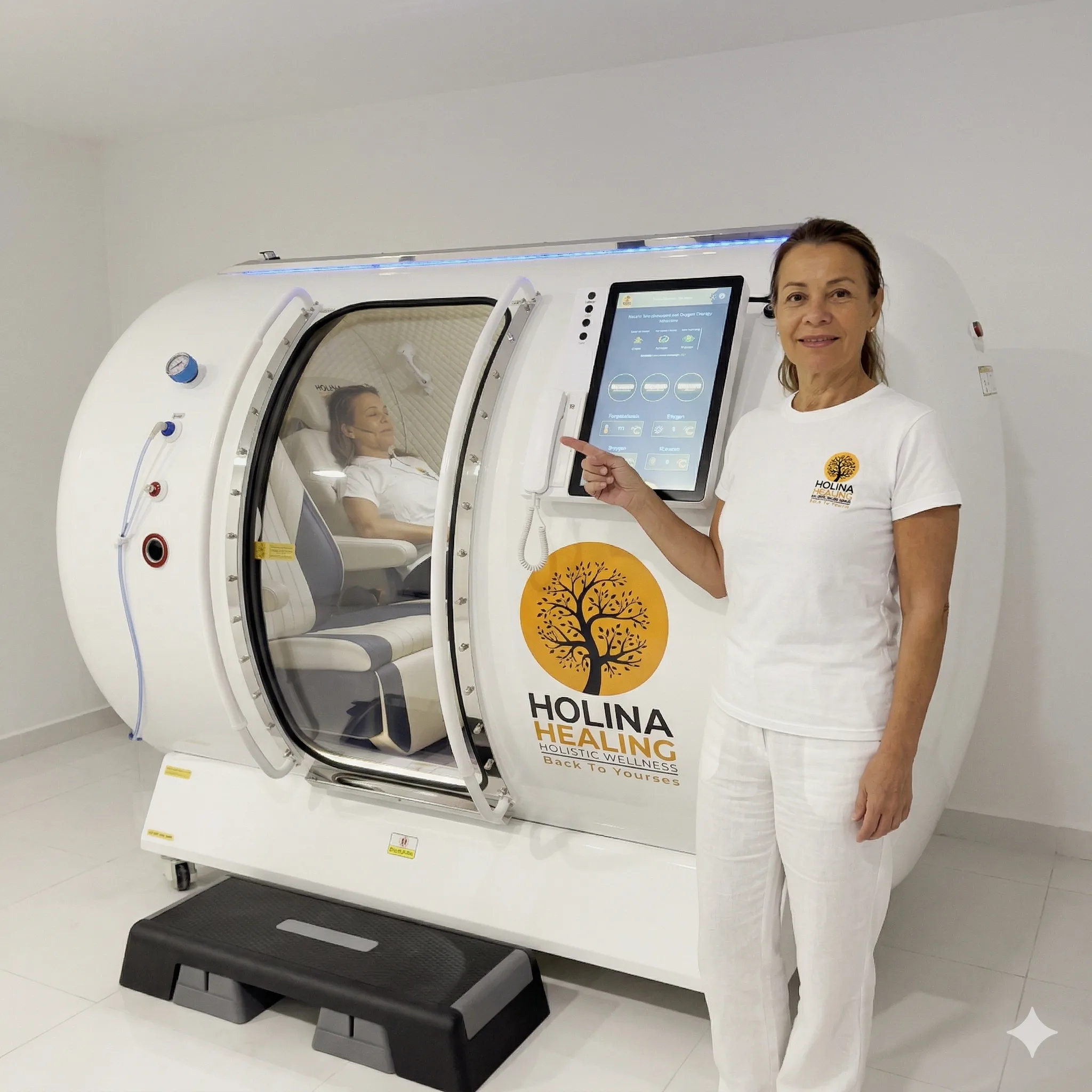
At Holina Healing, our residential programmes for parental burnout operate from the premise that recovery requires safety, time, and a deliberate reorientation toward relational presence. Parents arrive depleted. Our clinical approach integrates evidence-based psychotherapy with nervous system restoration through structured rest, circadian rhythm regulation, nutritional support, and therapeutic movement.
The residential container permits something impossible in weekly outpatient work: the opportunity to experience genuine respite without guilt, to sleep without parental vigilance, to rebuild confidence through small, manageable accomplishments within the therapeutic environment. Parents often report that only when removed from constant demand do they recognise how depleted they have become. Equally important, the programmes address the underlying relational patterns and beliefs that render parents vulnerable to self-effacement.
Our burnout recovery at Holina Healing is structured to permit this depth whilst preparing parents for sustainable reintegration. Parents return home with restored neurobiological capacity, clearer understanding of their vulnerabilities, and practical frameworks for maintaining boundaries and relational presence. The goal is not to make parenting feel easy. It is to restore the parent’s ability to remain genuinely present within its authentic difficulty.