For many people — particularly those carrying trauma, anxiety, or a nervous system that has been on high alert — seated meditation is not accessible. The instruction to close the eyes and focus inward can feel threatening rather than settling. The body that has learned to stay vigilant does not easily comply with a request to simply sit still and observe. This is not a failure of practice or discipline. It is the nervous system doing exactly what it learned to do.
Inner walking meditation meets the body where it is. By engaging the physical act of walking — the rhythm of the feet on the ground, the movement of the arms, the changing sensations of the environment — the mind finds a natural object of attention that is inherently grounding. The thinking mind has somewhere to go that is not the spinning of anxious thought. And the nervous system receives the movement it needs while simultaneously being guided toward presence rather than reactivity.
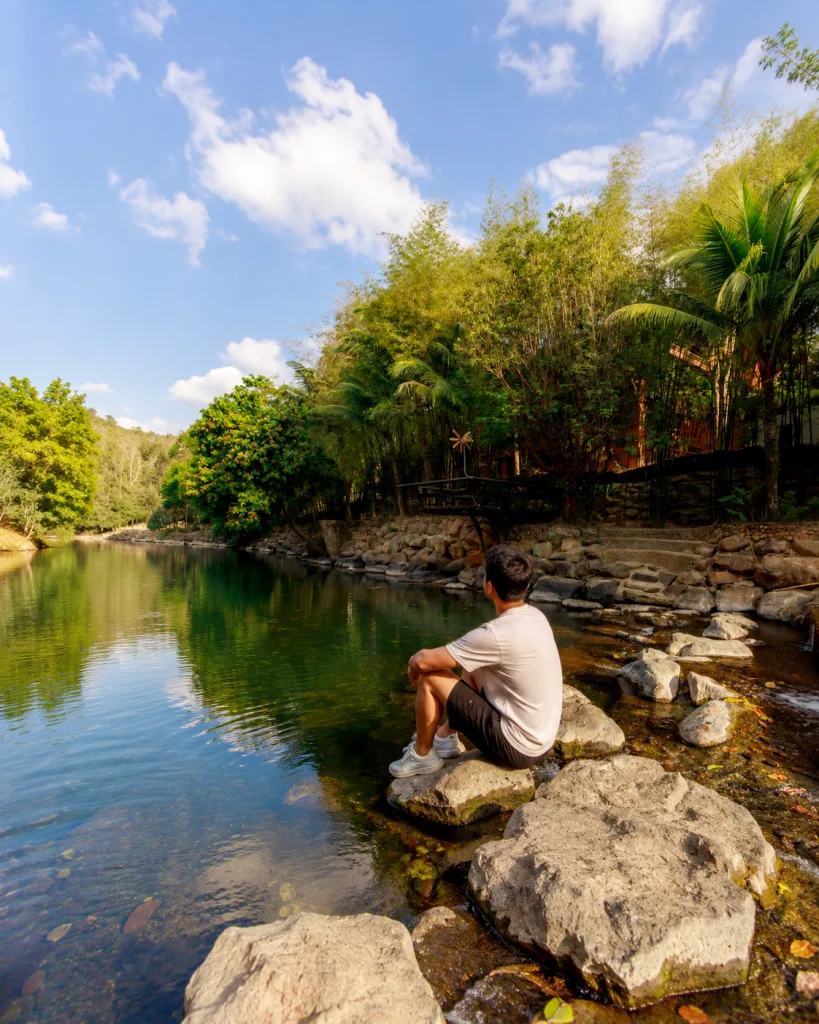
The environment of Holina Healing Centre in Khao Yai is not incidental to this practice — it is central to it. Walking meditation conducted in an urban environment, on a treadmill, or in a clinical room is a different experience entirely from walking in the forested hills of Khao Yai, surrounded by trees, birdsong, open sky, and the particular quality of quiet that only deep nature provides. The natural environment provides a sensory richness that supports and amplifies the meditative quality of the practice, offering the nervous system constant, gentle cues of safety that no indoor setting can replicate.
The repetitive, bilateral rhythm of walking activates the same bilateral brain stimulation that underlies several evidence-based trauma treatments. Combined with mindful attention to physical sensation — the contact of the foot with the earth, the movement of air, the weight of the body — walking meditation engages the interoceptive and sensorimotor systems in a way that gently brings a dysregulated nervous system into greater coherence. It is active enough to discharge the restless energy that makes seated meditation so difficult, and slow enough to allow genuine awareness to emerge.
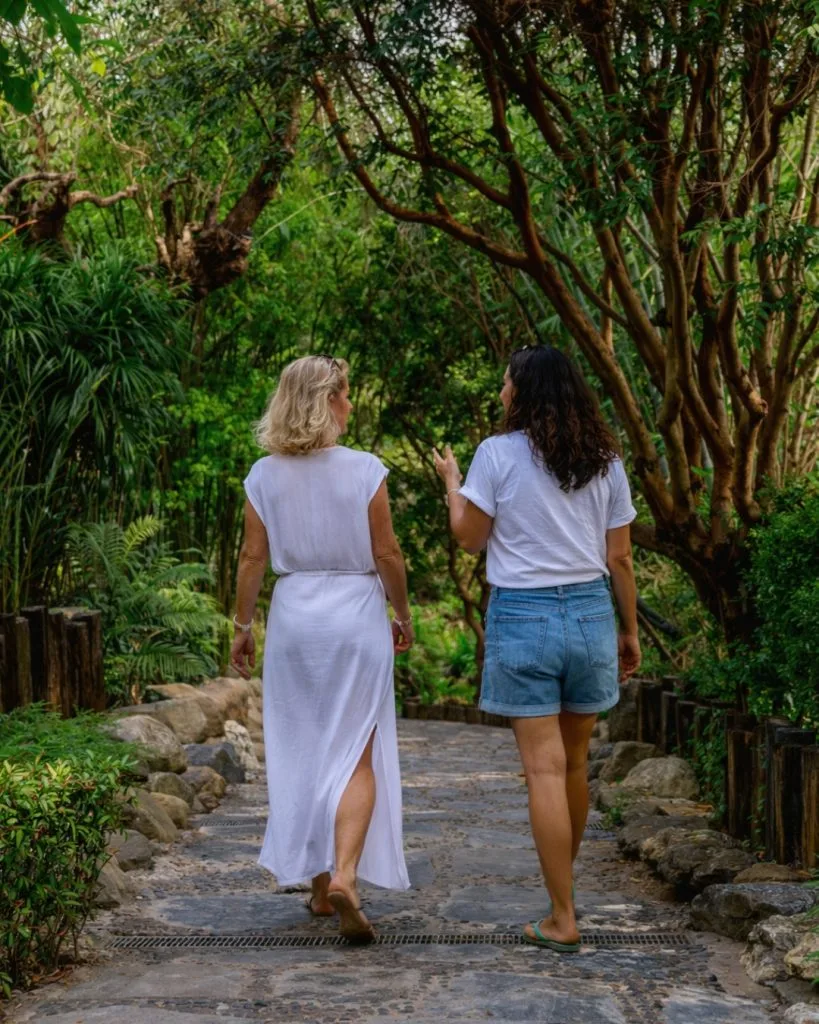
Inner walking meditation at Holina is introduced through guided sessions led by an experienced practitioner who teaches the technique, provides attentional anchors, and supports the transition from ordinary walking to genuinely meditative movement. As clients become more familiar with the practice, increasing time for self-directed walking is incorporated — building the capacity to access this quality of presence independently, as a lifelong practice rather than a programme-specific intervention.
Holina's location in the hills of Khao Yai provides a range of walking environments suited to different stages of practice and different therapeutic needs. Some routes are more enclosed and intimate — forested paths where the canopy creates a sense of containment and safety. Others open onto wider views — rolling hills, open sky, the expansive horizon that the nervous system reads as freedom. Practitioners help clients choose and navigate these environments in ways that serve their current therapeutic state.
Walking meditation is typically offered in the morning as part of the daily programme rhythm — a practice that sets the tone for the day's therapeutic work and supports the transition from sleep to full wakefulness in a grounded, present state. Morning practice in the forest, before the day's sessions begin, has a quality that many clients describe as one of the most consistently beneficial parts of their programme.
Inner walking meditation is woven through the Holina programme as a daily foundation practice alongside more intensive therapeutic work. It integrates naturally with:
None at all. Inner walking meditation is introduced from the beginning with full guidance. Many of the clients who benefit most have never meditated before — and some come specifically because seated meditation has never worked for them. The practice is taught from scratch and adapted to wherever you are.
The practice can be adapted to different physical capacities. Shorter routes, slower paces, and seated alternatives for portions of the practice are all available. Please mention any physical limitations during your clinical intake and we will ensure the approach suits your needs.
There is a meaningful difference between mindful walking and ordinary walking, and between inner walking meditation and both. Ordinary walking is typically automatic — the mind goes elsewhere while the body walks. Mindful walking brings deliberate attention to the physical experience of walking. Inner walking meditation goes further, using the walking as a vehicle for a quality of inward attention and presence that has specific therapeutic effects on the nervous system. The guidance and intention behind the practice are what make it therapeutic rather than simply pleasant.
Yes — and this is one of the practice's greatest strengths. Inner walking meditation requires nothing beyond your own body and a willingness to pay attention. It can be practised in a city park, on a beach, or in a garden as well as in a forest. Part of the programme's integration work is helping you establish a sustainable daily practice that travels home with you.
Guided sessions are typically thirty to sixty minutes. The duration is adjusted based on your current physical state, the weather, and your position in the programme. Self-directed practice can be as short as fifteen minutes and still be effective — the quality of attention matters more than the duration.
All enquiries are completely confidential. No obligation. We respond personally.
Begin Your Programme →