What Is a Trauma Healing Retreat?
A trauma healing retreat is a residential, clinically led programme where people affected by past trauma step away from daily life to recover in a structured therapeutic setting. Over a defined stay, a specialist team combines evidence-based psychotherapy, nervous-system regulation and daily support, giving the body and mind the sustained, unhurried conditions that genuine trauma recovery requires.
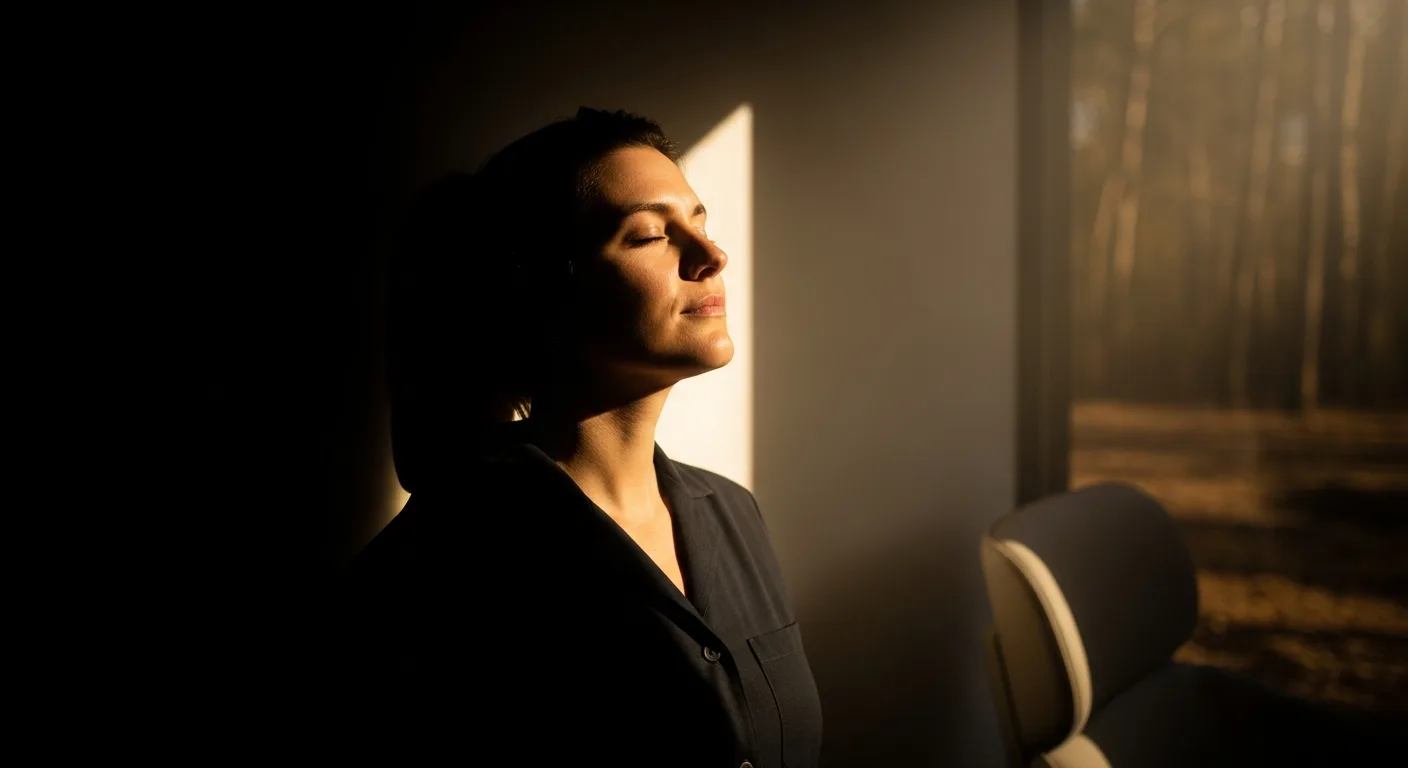
She had done everything the guidance suggested. Weekly sessions for two years. A folder of coping strategies. A prescription she took each morning without quite feeling it work. On paper she was functioning: a demanding job, a family, a calendar that never stopped. And yet the smallest things still moved through her like a current — a raised voice in the next room, a particular smell, the sound of a door closing too hard. Her body reacted long before her mind could explain why.
What she described, when she finally sat across from one of our clinicians, was not a lack of effort. It was the quiet exhaustion of managing something that had never actually been treated. The hour-a-week model had helped her cope, but it had never given her the space to stop coping — to let her guard down long enough for the underlying trauma to be reached.
In our clinical experience, this is the most common reason people arrive at a residential setting: not because outpatient care failed them, but because their nervous system needed conditions that a fragmented, part-time schedule could never provide.
What is a trauma healing retreat?
A trauma healing retreat is a residential programme, typically lasting several weeks, in which people live on-site while receiving structured, evidence-based treatment for the effects of trauma. Unlike a single therapy appointment, it holds the whole day — therapy, rest, nutrition, movement and sleep — inside one coherent clinical container.
The word “retreat” is often misunderstood. This is not a break away, and it is not a wellness getaway. It is a period of concentrated, supported recovery in which the ordinary demands that keep trauma responses switched on are deliberately removed. In the behavioural health field, this is closer to residential treatment than to relaxation. The setting matters because trauma lives in the body as much as in memory, and a body that never feels safe cannot begin to heal.
Who is a trauma healing retreat for?
It is for people whose past is still shaping their present — often long after the events themselves have passed. Trauma is far more widespread than most assume. The World Health Organization estimates that around 70% of people globally will experience a potentially traumatic event in their lifetime, and that roughly 3.9% of the world’s population will experience PTSD at some point.
People come to us carrying the aftermath of childhood adversity, loss, accidents, medical events, betrayal, or prolonged periods of stress that never resolved. Many do not have a formal diagnosis; what they have is a life quietly organised around avoidance, hypervigilance, numbness or exhaustion. Some have functioned at a high level for years while privately holding themselves together, and it is often the effort of that holding — rather than any single crisis — that finally brings them to consider residential care. A residential programme is often most appropriate when symptoms persist despite outpatient care, when day-to-day life has become difficult to sustain, or when someone needs to step out of an environment that keeps re-triggering them. Our childhood trauma therapy track, for instance, is built around exactly these long-standing patterns.
Why do standard treatment pathways often fall short?
They fall short not because the treatments are wrong, but because the format frequently is. Effective trauma therapy exists — NICE recommends trauma-focused CBT and EMDR as first-line treatments for adults with PTSD. The difficulty is that a single weekly hour asks a person to open the most painful material they carry, then return immediately to work, family and the very stressors that sustain their symptoms.
For many, this stop-start rhythm keeps the nervous system braced. Progress made in one session is undone by a week of ordinary strain before the next. This is compounded by scale: with lifetime PTSD prevalence at 6.8% among US adults — and higher among women, at 5.2% past-year prevalence versus 1.8% in men — outpatient services are often stretched, waiting lists long, and continuity hard to protect. A residential setting removes that friction by holding the therapeutic work and the recovery environment in the same place, at the same time.
What actually happens during a trauma healing retreat?
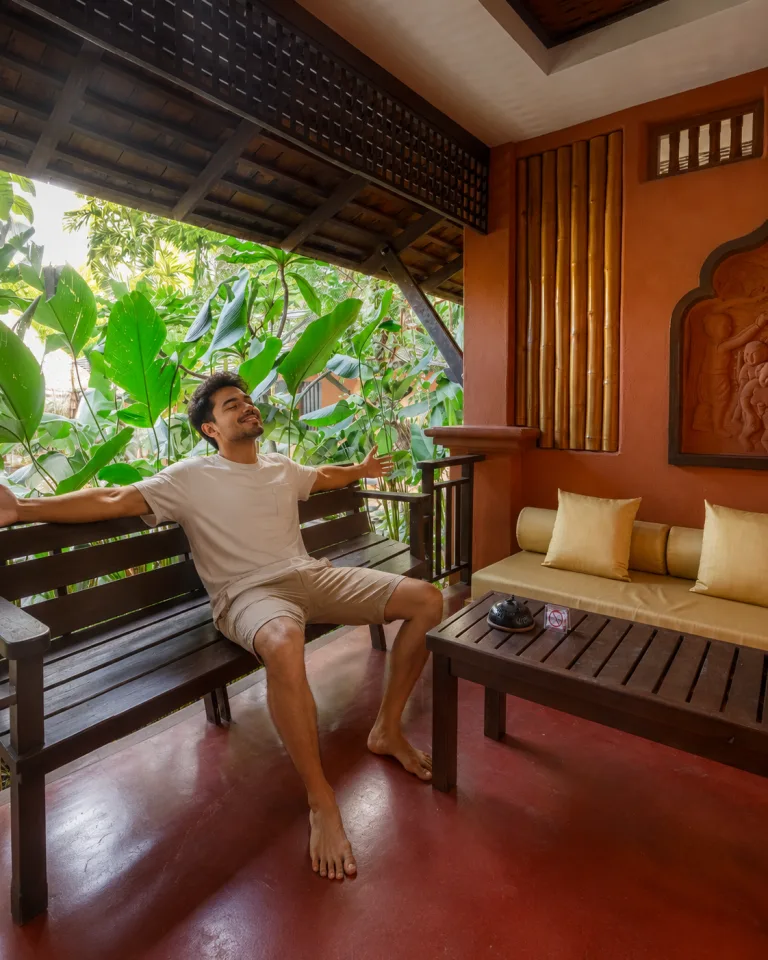
The experience is structured, but never rushed. A stay usually begins with a thorough clinical assessment, from which our team builds an individual plan rather than fitting each person to a fixed template. Days combine trauma-focused psychotherapy with practices that help regulate the nervous system — breathwork, movement, restorative sleep and time in a calm natural setting. At our Khao Yai location, that setting is inland forest and river, chosen deliberately for its stillness.
Crucially, the therapeutic work is paced to what each person can tolerate. Trauma treatment done too fast can overwhelm; done within a supported container, it can go deeper and hold. Programmes are offered across different lengths so that depth can match need — from a focused 30-day trauma recovery programme to a longer 60-day trauma recovery programme for more entrenched patterns. For those whose primary difficulty is a body stuck in a state of alarm, a dedicated nervous system reset retreat focuses first on restoring physiological safety. Men in particular often present differently and delay reaching out for longer, a pattern we address directly in trauma recovery built for men.
“The single biggest advantage of a residential setting is time — not just more of it, but time in which the body can finally lower its guard. Only once the nervous system feels genuinely safe can the deeper trauma work actually take hold.” — Dr. Natalie Lindemann, Senior Psychotherapist, Holina Global
How is a trauma healing retreat different from a hospital or rehab programme?
A trauma healing retreat is residential and clinically led, but it is oriented toward recovery and integration rather than acute stabilisation or addiction treatment alone. A hospital manages crisis; a general rehab programme is usually structured around substance dependence. A trauma retreat, by contrast, treats trauma as the primary difficulty and organises the whole environment around processing it.
The distinction is not about intensity — the clinical work is serious — but about focus and setting. The emphasis is on creating conditions of safety, continuity and depth over a sustained period, rather than the shorter, containment-focused model of a hospital admission. This same principle of setting and timing applies to loss that hasn’t fully arrived yet — a distinct clinical picture we explore in anticipatory grief and the nervous system.
What does genuine trauma recovery require?
Recovery requires more than symptom management. It requires safety, time and skilled care held together long enough for the body to trust that the threat has passed. Encouragingly, recovery is common: the WHO notes that up to 40% of people with PTSD recover within a year, and only a minority of those exposed to trauma develop a lasting disorder at all.
What a residential programme offers is the removal of the everyday obstacles that keep people in a holding pattern — and the presence of a consistent team who can meet the difficult moments as they surface, rather than leaving them to be managed alone between appointments. In our clinical experience, this continuity is what allows the deeper work to hold once someone returns home. Genuine recovery is rarely linear, and it is not achieved by willpower. It is built, gradually, in an environment designed to allow it, and it depends as much on what surrounds a person as on the therapy itself. If you are weighing whether this is the right step, our admissions process is a place to begin. Reaching out changes nothing on its own. It is simply the willingness to learn what might be possible.
Frequently Asked Questions
How long is a trauma healing retreat?
Programmes commonly run from 30 to 90 days. The right length depends on the nature and duration of the trauma, current symptoms and personal circumstances, which are assessed before a plan is agreed.
Is a trauma retreat the same as a wellness holiday?
No. A trauma healing retreat is a clinically led residential treatment programme delivered by a specialist team. Rest and a calm setting support the work, but the core is evidence-based therapy, not leisure.
Do I need a formal PTSD diagnosis to attend?
No. Many people who benefit do not have a formal diagnosis. What matters is that trauma is affecting daily life. An assessment helps determine whether residential care is appropriate for you.
What kinds of trauma are treated?
These include childhood adversity, loss and grief, accidents and medical trauma, betrayal, interpersonal harm and prolonged stress. Treatment is tailored to the individual rather than the label.
What therapies are used?
Approaches are drawn from evidence-based trauma treatment — including trauma-focused psychotherapy — alongside nervous-system regulation such as breathwork, movement and restorative practices, combined into an individual plan.
Is residential care better than weekly therapy?
Neither is universally better. Residential care suits people who need continuity, depth and distance from daily stressors, particularly when outpatient support alone has not been enough.
Can I attend if I have tried therapy before without success?
Yes. Many arrive precisely because part-time therapy did not reach the underlying trauma. A residential setting offers different conditions rather than simply more of the same.
Where is the retreat located?
Our trauma recovery programmes are delivered in Khao Yai, Thailand, in an inland forest and river setting chosen for its stillness and privacy.
Will I have privacy during my stay?
Yes. Confidentiality and a protected, low-stimulation environment are central to how the programme is structured, so that recovery can happen without external pressure.
Is a trauma retreat suitable during an acute crisis?
A residential trauma programme is designed for recovery and integration, not acute emergency care. If someone is in immediate crisis, urgent local services should be contacted first.
How do I know if it is the right time?
If trauma is persistently shaping your daily life, relationships or ability to function, it may be worth exploring. A confidential conversation can help clarify whether now is the right moment.
What is the first step?
The first step is an initial, confidential conversation and assessment. There is no obligation attached to finding out what care might be available to you.
Clinically reviewed by Dr. Natalie Lindemann — Senior Psychotherapist, Holina Global · Last reviewed 20 July 2026